CLUSTER

Liberated Futures Fund Portfolio

23 organizations$140.8M raised of $557.9M goal (25%)

$140,809,351 raised

Remaining$417,081,758

$557,891,109 goal

Grant$113,888,351 of $444,306,109
Recoverable grant$2,000,000 of $28,185,000
Loan$19,445,000 of $66,100,000
Equity$5,476,000 of $19,300,000

$417,081,758 still to raise across 23 organizations

Focus areas

Areas of work, frameworks and vision, strategies, and demographics reported by members in this cluster.

Areas of work

Frameworks & vision

Strategies

Demographics

Areas of impact

Ordered from most shown to least shown across recipient organizations.

About this cluster

Story, fundraising, and details on this overview.

Description
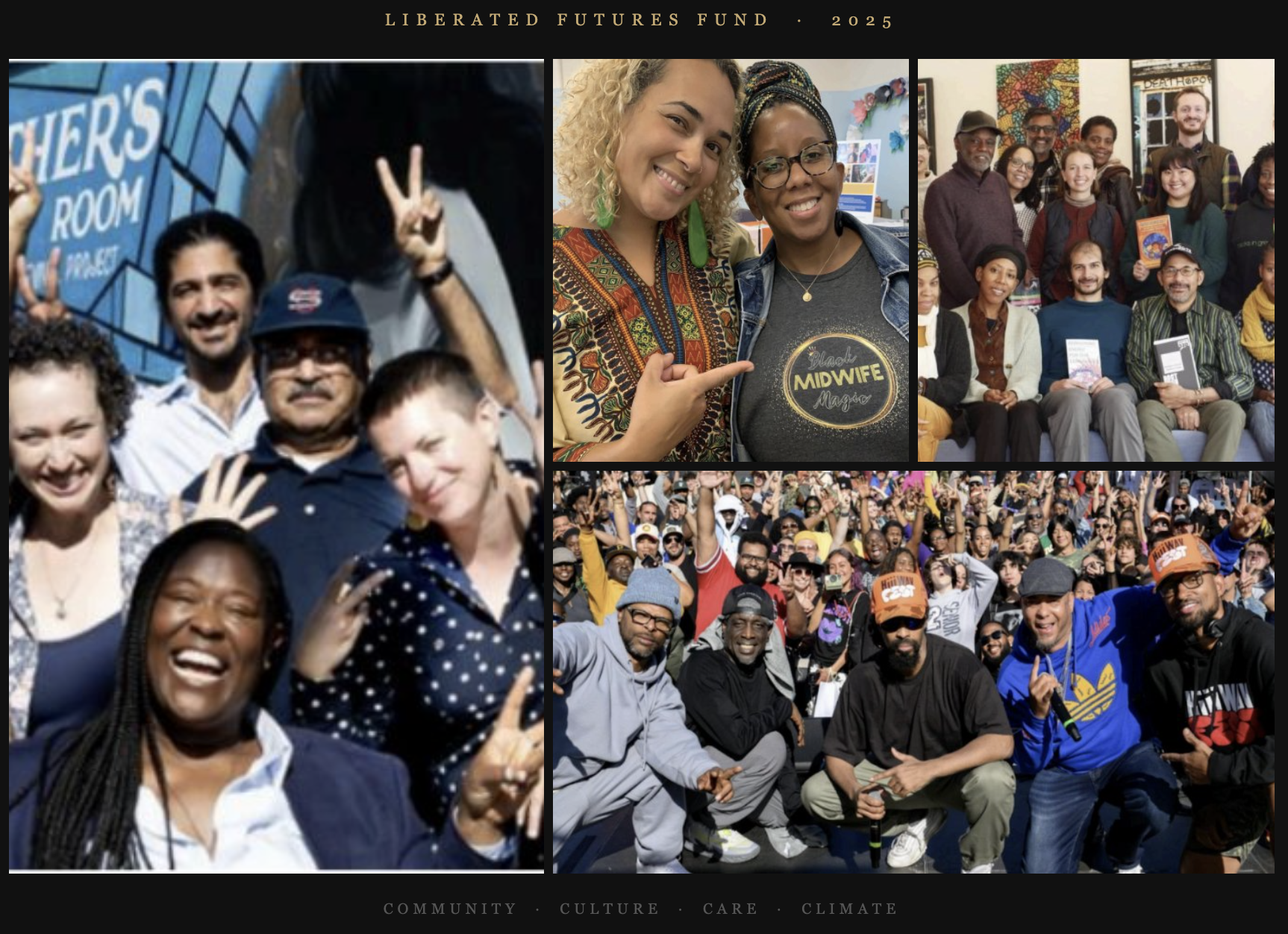
The Liberated Futures Fund channels patient, flexible capital into a portfolio of visionary organizations working at the intersection of housing, energy, food, health, gender, and economic justice. This report shares what that investment made possible. The 2025 Portfolio Report covers grantees and loan recipients across four thematic pillars: community ownership infrastructure, BIPOC self-determination, gender justice, and ecological stewardship. It draws on impact narratives submitted directly by portfolio organizations to document the projects unlocked, the organizations stabilized, and the communities served — from cooperative land ownership in Oakland to community-owned solar across seven states.

Cluster media media

Teachings

This portfolio teaches us that the nature of capital matters as much as the amount. When organizations have flexible, trust-based resources behind them, they shift from survival to strategy — responding to emergencies, weathering sudden funding gaps, and building toward long-term vision without interruption. Non-extractive lending works. Strong and in many cases 100% repayment rates across the portfolio prove that the "risk premium" historically applied to community lending is largely a myth — one that has kept Black, Indigenous, and working-class communities locked out of traditional financing for too long. Governance infrastructure is as important as program capital. Legal scaffolding, shared governance documents, and democratic membership structures are what make community assets permanently accountable to the people they serve. And community-led networks consistently outperform isolated organizations — shared commons models and multi-partner governing bodies create the resilience that no single organization can build alone.

Custom section 1 media

Members

23 organizations in this cluster